


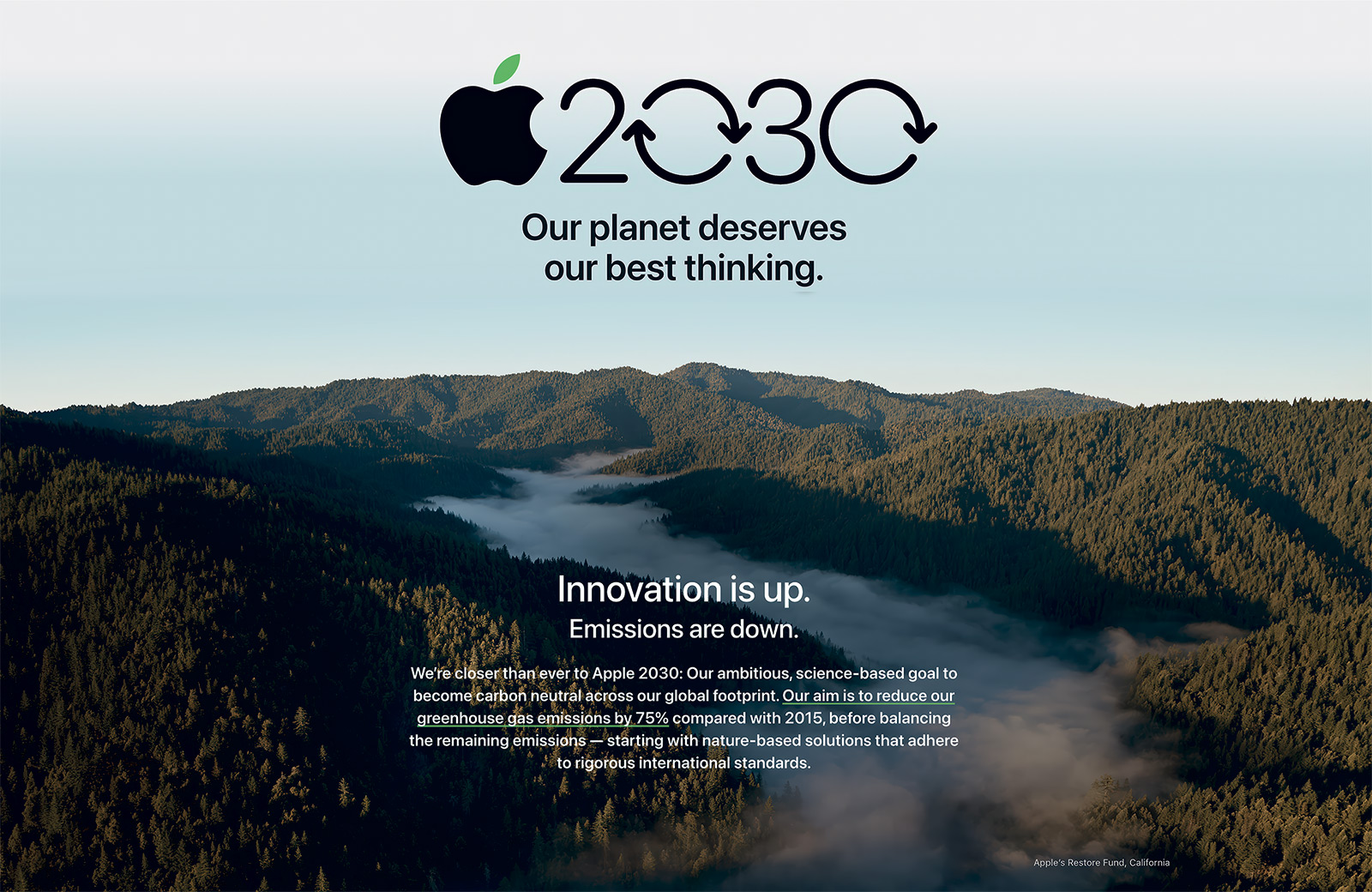
30% recycled materials, plastic-free packaging and more sustainable batteries at the core of the Apple 2030 strategy
In 2025, Apple reached the highest level of recycled materials ever used in its products: 30% of all materials used in the devices shipped during the year came from recycled sources. This is a remarkable achievement for a multinational company that manufactures hundreds of millions of devices, including iPhones, Macs, iPads, Apple Watches and accessories.
This milestone is part of the Apple 2030 strategy, the company’s roadmap to achieve full carbon neutrality by the end of the decade. According to Apple’s latest Environmental Progress Report, the company is well on track to meet its targets, as total greenhouse gas emissions are now more than 60% lower than in 2015, despite continued business growth and expanding production. In absolute terms, Apple estimates that its environmental initiatives helped avoid approximately 43 million tonnes of greenhouse gas emissions in 2025.
Apple’s strategy is primarily based on replacing virgin raw materials with secondary materials recovered through advanced recycling processes. This is a key issue for the electronics industry, which relies heavily on critical minerals often associated with significant environmental impacts, high energy consumption and geopolitical risks.
Apple’s recycling achievements
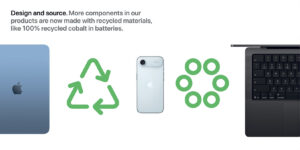
In addition to the record 30% recycled material content across all products shipped in 2025, Apple also reached several important milestones regarding recycled content in specific components. Today, all Apple-designed batteries are made with 100% recycled cobalt, while all magnets contain 100% recycled rare earth elements. Furthermore, all Apple-designed printed circuit boards use 100% recycled gold in their plating and 100% recycled tin in their soldering. The report also highlights other significant figures: around 70% of the aluminium used comes from recycled sources, recycled lithium has reached 90% in selected applications, while recycled copper now accounts for approximately 20% of the total copper used.
One of the symbols of this transformation is the new MacBook Neo, introduced in 2026, which contains approximately 60% recycled materials. This is an exceptionally high percentage for a laptop, considering the complexity of metal alloys, batteries and miniaturised electronic components.
Material recovery is not only an environmental sustainability issue but also one of industrial security, as the critical raw materials used by the technology industry are concentrated in a limited number of countries and are subject to considerable geopolitical volatility. Building supply chains based on material recovery therefore increases manufacturing resilience while reducing dependence on extractive industries.
Apple has also invested heavily in automated material recovery systems. Its in-house developed Daisy and Cora robots are designed to disassemble end-of-life devices and separate valuable materials such as rare earth elements, aluminium, tungsten and cobalt. Returned devices are first assessed: reusable products are refurbished, while the remaining units enter automated disassembly systems.
Plastic-free packaging: 15,000 tonnes eliminated
In 2025, Apple completely redesigned its packaging by replacing plastic with fibre-based solutions. Today, every Apple package is made primarily from recyclable fibre-based materials, with only minimal amounts of inks, coatings and adhesives. This redesign enabled Apple to eliminate more than 15,000 tonnes of plastic, equivalent to approximately 500 million single-use plastic bottles.
The transformation involved every packaging component: inner trays, protective inserts, films and supports were replaced with recycled paper-based materials or materials sourced from certified supply chains. Packaging dimensions were also optimised to improve logistics efficiency. Smaller packaging volumes have a direct impact on transport emissions, allowing more products to be shipped per load while reducing energy consumption and the CO₂ associated with global logistics.
Energy, water and supply chain: circularity extends across the global value chain
Perhaps the greatest challenge in Apple’s environmental strategy concerns its supply chain. For this reason, the company is encouraging its suppliers to make extensive use of renewable energy. In 2025, industrial partners participating in Apple’s programme purchased approximately 38 million megawatt-hours of renewable electricity.
At the same time, Apple continues to improve industrial waste management. More than 600,000 tonnes of waste were diverted from landfill through Zero Waste programmes implemented across the supply chain, while around 400 manufacturing sites now participate in Apple’s global programme for industrial material recovery and recycling.
Water stewardship is another key priority. Apple states that it has already replenished more than half of its corporate water consumption through conservation and watershed protection programmes. In addition, all eight of the company’s data centres have achieved Alliance for Water Stewardship certification. Electronics manufacturing requires enormous quantities of ultra-pure water, particularly for semiconductor production. Reducing water consumption and increasing water reuse therefore represent some of the industry’s most important environmental challenges.
Apple is also working to reduce the fluorinated gases used in the manufacture of displays and semiconductor chips, substances with a very high global warming potential. At the same time, the company continues to invest in the decarbonisation of logistics and the electrification of part of its transport operations.
These figures clearly demonstrate how Apple is helping redefine industrial standards within the electronics sector. Increasing recycled content to 30%, almost completely eliminating plastic from packaging and converting entire categories of components to secondary raw materials means transforming sustainability from a communication exercise into a concrete industrial strategy.
https://www.apple.com/environment